





What is Blower Door Testing?
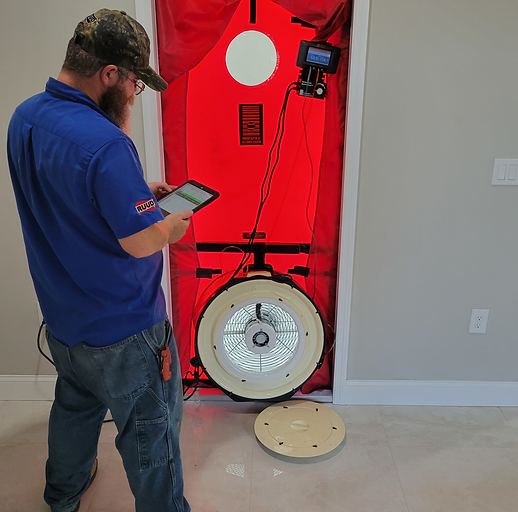
The Fifth Edition of the Florida Building Code (FBC) requires blower door testing for all residential dwelling units. This requirement applies to single-family houses, townhouses, duplexes, and individual condominium and apartment units where the building is three stories or less. Blower door testing determines how much air is entering or escaping openings in the building.
The test can identify areas around doors, windows, walls, ceilings, and other building components where air leakage may occur. Identifying these areas can help improve energy efficiency, indoor comfort, and overall building performance while ensuring the dwelling meets code requirements.
There are many benefits to blower door testing such as:
- Reducing energy consumption from excess air leakage.
- Avoiding moisture condensation problems.
- Avoiding uncomfortable drafts caused by cold or warm air leaking in from outside.
- Controlling outdoor contaminants, pests, and odors from entering your home.
- Determining proper sizing and airflow requirements of heating and cooling equipment.
- Determining whether mechanical ventilation is needed to provide acceptable fresh air and maintain indoor air quality in your home.
- Reducing energy consumption from excess air leakage.
- Avoiding moisture condensation problems.
- Avoiding uncomfortable drafts caused by cold or warm air leaking in from outside.
- Controlling outdoor contaminants, pests, and odors from entering your home.
- Determining proper sizing and airflow requirements of heating and cooling equipment.
- Determining whether mechanical ventilation is needed to provide acceptable fresh air and maintain indoor air quality in your home.
Preparing for a Blower Door Test
The technician will perform the test, including a walk-through of your home, setting up the blower door, and conducting the test. The following steps will help prepare your home for a blower door test:
- Plan to do a walk through of your home with the technician. Be prepared to point out areas that you know are drafty or difficult to condition comfortably.
- Expect the technician to request access to all areas of your home including closets, built-in cabinets, attics, crawl spaces, and any unused rooms.
- The technician will need to close all exterior doors and windows and open all interior doors in the home.
- Expect the technician to shut off any gas-powered appliances, such as water heaters and gas stoves, to ensure that they do not fire during the test. They should return them to the original position after the test.
- Expect the test to take up to an hour or more, depending on the size complexity of your home.